Starting a business today feels like a stressful practice and causes a mess in your mind while making decisions. Evaluating growth and profits, planning future projects comes with a sense of responsibility. But this is where data entry tools save your day, as they can stabilize workflow automation and finances with their advanced abilities.
Dataqix has selected the 10 best applications of these domains that will help you to mitigate your responsibilities, and you will get detailed information about them in this detailed guide. Businesses looking to streamline manual operations can also outsource data entry.
What Are Data Entry Tools?
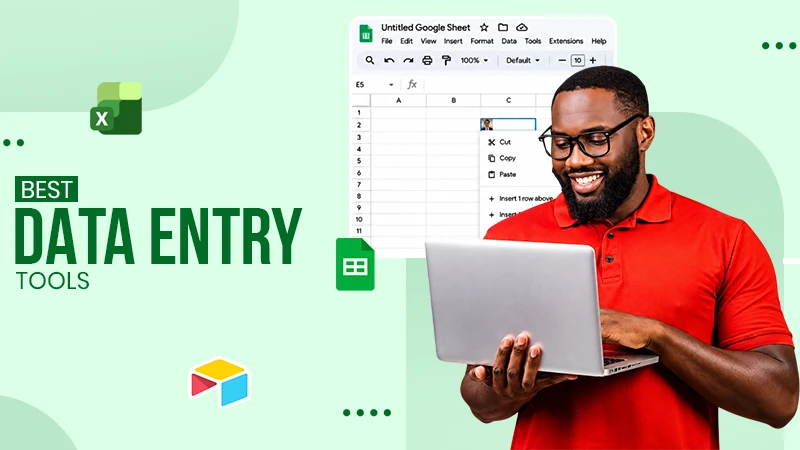
Data entry tools are a specific type of software program that are designed to index, allocate, and verify data of different categories.They integrate various sectors of information and allow people to use them to fulfil requirements and perform actionable procedures. In many workflows, the collected information is further handled through data processing services to organize and prepare it for business use. Some of the most popular data entry tools that you might often use are Google Sheets and MS Excel, which help to store data in almost every form and appearance.
Why Businesses Use Data Entry Software?
Businesses mostly use the data entry software for conducting multiple practices, like workflow management, fixing errors, and integration of different tools to streamline complex operations while simultaneously mitigating employee burden.
It also helps to make your decision-making better through the assets indexed on data sheets and presented in various formats like pie charts and demographics, which feature all the necessary information. Other than that, there are several other secondary benefits, like cost savings and enhancements in data security protocols.
Top 10 Data Entry Tools in 2026
To provide the best option according to your specific needs, we have compiled the 10 best data entry tools that can complete any modern requirement in just a few clicks with the help of their user-friendly algorithm.
Microsoft Excel is one of the oldest and most trustworthy data entry software as it has almost everything users ask for, combining multiple insights and entries to combine them into a desirable format. You can perform countless actions using basic and advanced formulas for creating new formats or compiling complex information. If you purchase a premium subscription of Microsoft 365, then you can access the extended set of features, like the AI workspace powered by Copilot.
2. Google Sheets – Best Cloud-Based Data Entry Application
Google Sheets is also a complete software for database management, but in modern-day usage, it has a little upper hand because of efficient cloud-based management and record encryption, which is protected by Google. It is also very useful; you can integrate various other applications like Google Forms and Google Docs to create more expandable insights. You can also access some of its features with Gemini by taking the Google One subscription.
3. Zoho Forms – Best Data Entry App for Online Forms
Zoho Forms is an ultimate tool used for collecting consumer feedback and managing databases without any coding interventions. It is based on a selection format where users can select the options given according to their preference, rather than typing the whole input. This makes the collection of reviews easier and faster than those long spreadsheets.
Airtable is a very versatile relational database software that is primarily equipped for tracking project progress, assigning tasks, and building custom internal applications for product and marketing operations. Although you can use it for free, for some additional professional tools, the cost starts at $20 per user, per month.
Jotform is a vast platform that is made for conducting personalized surveys, managing transactional values, and creating workflow automation. The premium plans of this tool depend on scalability, and they can range from $39 to $129.
6. Ninox – Best Database-Oriented Data Entry Software Program
Nixon is a great utility that is used as a low-code/no-code cloud database and can serve the complete purpose of a business software platform by improving indexing, building interfaces, and helping with business decisions. Its premium starts from $12 and goes to 36$.
7. Typeform – Best User-Friendly Data Entry Application
Typeform is an exemplary SaaS (Software as a Service) platform that is very user-friendly and allows people to create dynamic, conversational forms, surveys, and quizzes. The monthly plans of this solution start from $24 and reach up to $349.
8. Formstack – Best Enterprise Data Entry Software
Formstack is a great accessibility for the enterprise to manage various operational records and consumer data under one roof with minimal human assistance, promoting complete resilience. This tool is generally preferred for sales teams to manage different characteristics and insights about their leads
9. Cognito Forms – Best Budget-Friendly Data Entry App
Cognito Forms is also a very great tool that works in an online drag-and-drop builder format to create user-friendly forms, records, and indexes to manage different capabilities of data. Its Pro plan starts from $19 month, and the Enterprise plan costs around $129 month
Last but not least, Kofax Capture is an immersive tool for document scanning, classification, OCR data extraction, and workflow automation platform. It digitizes paper and electronic inputs and integrates them into back-end systems. There is no free access to this utility, so you have to buy an enterprise bundle that costs between $4,040.00 and $9,480.00 annually.
Key Features to Look for in Data Entry Software
There are some essential keys that you must look for in a data entry software, as they are essential to perform some lucrative actions that are necessary for the growth and sustainability of your business. Some of the influential aspects of an ideal data entry tool include:
Data Validation and Error Checking
Data entry tools are built to validate entries for authenticity and precision, classify all necessary details for indexing, and ensure that all human errors are corrected. This is a capability that is a must-have, as it builds a sense of authority in the databases and fixes the mathematical and grammatical details using integrated technologies like AI and OCR.
Automation and Workflow Management
Data automation and workflow management are essential in big 2026 due to the integration of so many utilities and to speed up generic functions like basic data allocation, text mapping, sourcing information, etc. Also, it improves overall workflow management and creates more room for creative attributes.
OCR and Document Scanning
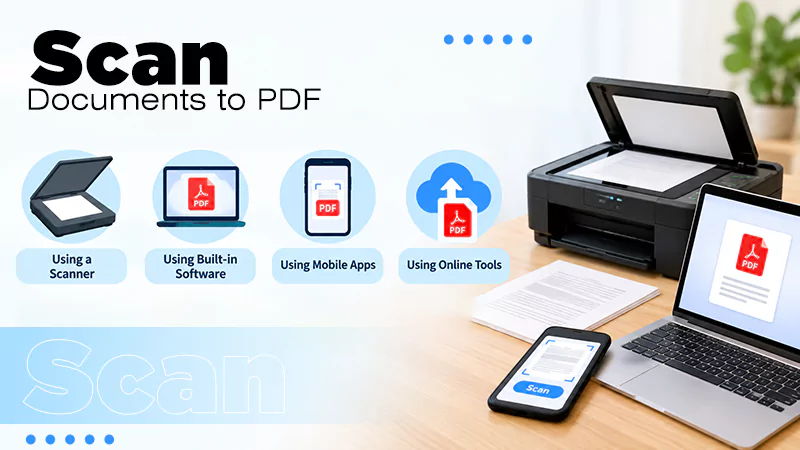
Features like OCR (Optical Character Recognition) and document scanning are pivotal for any data entry tool because these features help to make paper-based documents, handwritten letters, textbooks, and images into digitally formatted data that is readable, easy to access, and highly flexible in editing. Many organizations also rely on data extraction service solutions to capture information from physical and digital documents with greater accuracy.
Cloud Accessibility
Cloud accessibility is one of the most crucial features nowadays that should be there in a data entry tool, as it allows users to store their records on cloud-based servers and provides better safety due to strong encryption. It also eliminates the hassle of saving databases in computer drives and automatically saves the entries in real time.
Integration Capabilities
Data entry apps that can integrate with other software programs like presentation makers, documentation, forms, etc., are considered the best in kind. These types of utilities are considered versatile due to their flexibility and provide employees with easy adaptability to unique features.
Common Types of Data Entry Applications
Well, there are some specific domains of data entry applications that serve unique purposes and involve different human actions to store the insights effectively. Due to their unique characteristics, they are segmented into four categories. Let’s take a look at them one by one.
Spreadsheet-Based Tools
Spreadsheet-based tools are the most basic yet most used category of data entry tools due to their relevance among the masses. They are widely adopted by major companies as they are free to use and require human intervention for data input and creation of assets like tables, graphs, and pie charts. Some of the common names of this category include MS Excel and Google Sheets.
Form-Based Data Entry Apps
Form-based data entry apps are vastly popular in this segment as they work in the drag-and-drop architecture and selection protocols instead of typographical entries, which makes the collection of human responses easier. Google Forms and Zoho Forms are widely used tools for this domain.
Database Management Tools
Database management tools or systems (DBMS) are used to manage a large set of information and compile it into insightful reports to improve crucial metrics of decision-making and profit assessment. This category includes tools like Airtable and Microsoft Access.
OCR Data Entry Software
OCR data entry software is a division in this category, which is used for scanning documents, images, and handwritten notes for data extraction and their consolidation into spreadsheets. After extraction, many businesses use data conversion services to transform files into standardized formats such as Excel, CSV, XML, or JSON.
Data Entry Software Examples by Industry
Industries use data entry software according to their requirement and select tools that can easily integrate with their existing system to promote operational efficiency. Organizations also aim to automate generic entry tasks using these utilities. Below, we have how different domains have adopted these applications systematically for their development.
Healthcare
Healthcare has a prominent use of these utilities as they can fulfill the demands to retain patient data, their diagnosis, and prognosis, and allow hospitals to manage the expenditure of every patient without any miscalculations. These applications also help medical professionals to suggest assistance according to their budget and locality.
Finance and Accounting
Data entry tools are vital pillars of financial institutions and accounting firms as they play a major role in storing information in databases with extreme precision and allow professionals to perform complex calculations using formulas and prompts. They mitigate errors of human calculations, which improves the credibility and efficiency of the organizations.
E-Commerce
A successful ecommerce brand can only become a possibility with the integration of a good data entry software, as it allows business owners to track various attributes, such as stock, remaining items, and most selling items, and simultaneously helps in managing the consumer data for upgrading consumer acquisition strategies and costs.
Logistics
Logistics departments are highly reliant on the data entry tools as they carry out so many critical functionalities like inventory, consumer credential management, transactional slips, and provide complete demographics about deliveries and return packages.
Education
Educational institutions use data entry aspects for conducting pivotal operations like result creation, academic performance, behavioral assessment, and student fee submission to effectively track the progression of each alumnus.
Benefits of Using Data Entry Apps for Business
Data entry apps bring so many benefits to your business as they are capable of providing various positive attributes to streamline the complexities of crucial projects and allow individuals to work faster with cutting-edge precision. But the list doesn’t end here; in fact, it brings improvements in so many aspects of organizational efficiency.
Faster Data Processing
Data entry tools allow faster processing of inputs like dates, times, and locations through their own lucrative database, which allows users to speed up their work and enter only crucial queries. Due to this, ability management and indexing become easier for the teams, and they can focus on collecting other componential insights about sales, demand, inventory, and consumer behavior.
Reduced Human Errors
Human errors get drastically reduced when you opt for data entry tools, as most of the solutions are empowered with AI and other elements that focus on maintaining the precision in data and its obtained values. The best part is that it finds errors that you overlook most of the time due to a lack of knowledge in specific domains. For example, Google Sheets automatically fixes the names of different locations and postcodes when you enter them incorrectly.
Better Collaboration
Data entry tools also improve collaboration as most tools can be accessed by multiple users in real time, and they can work together in a single spreadsheet to complete the entire database indexing. This saves a lot of time and reduces the workload for a single team or employee, promoting a healthier work culture.
Improved Reporting
Improved reporting is also a very underrated yet effective data entry tool providing people to present data in various formats like graphs, pie charts, etc., which improves readability, and these data formats can be easily assessed by various domains of your organization like marketing, sales, and human resources. These things help to understand the strengths and identify the weak spots of your business.
Cost Savings
The ultimate benefit of these utilities is the cost savings, as all of these features, like collaboration, reporting, and error fixations, help to promote fair participation of all the teams and allow people to not make mistakes, which can be very costly for the businesses. Also, you can hire fewer workers in your company and train only a handful of employees to optimize productivity using the automated attributes of data entry tools and save a lot in the early employee budget.
How to Choose the Right Data Entry Tool?
To select the right data entry tool for the enterprise management or resource allocations of goods and services, there are some factors involved that one should address before making the final decision, as without these considerations, things might go off track. Let’s break down these factors one by one:
1. Assess Your Data Volume
This phase is very crucial because assessing the data volume unlocks the true details about the scale of your organization and its growth trajectory in the next few years, thus you will save a lot of money while your organization is still in the initial stage. This data analysis also allows you to stop overspending on systems and applications that are not required for your achievable goals.
2. Determine Automation Needs
Now, determine your automation needs as per talent acquisitions and employee strength, then look out for some pivotal factors in the software like OCR integration, AI additions, data classification, and indexing abilities. This will allow your teams to work efficiently towards the growth of companies instead of just collecting and categorizing the data for the whole day.
3. Evaluate Security Features
Looking for security features in your desired data entry tool is a very critical aspect for your organization, as it contains some very important credentials, such as their age, gender, locality, transaction details, etc. If these details get leaked or threatened due to poor encryption and safety loopholes, then nothing can save your company from the tsunami of negative reviews and major audience fallout.
4. Compare Pricing Models
Always compare prices of different options on the internet to choose the best option according to your budget and needs. Never believe in flashy ads or promises, and only opt for the tools that have features to fulfill your data entry requirements. Also, overspending on high-end models can disrupt your overall capital expenditure of the organization.
5. Test Ease of Use
In the last step, test how easily you and your teammates are using the software program using their free trials or limited version to evaluate their performance and adaptability in various situations. Also, this helps to monitor the stability of the system when it is being stuffed with a high volume of data, and you can measure its endurance. Make sure to also check that it can be accessed by multiple team members in real time so that tasks can be performed even faster.
Conclusion
Data entry tools are essential for almost every domain in the world due to the robust growth of institutions and their relevance among the masses. Professionals use these utilities for multiple practices like data stacking, analysis, integration, and allocation of both resources and human-based queries to understand the demand of their clients or effectively manage the supply chain.
Data entry tools mentioned in this list are best in all use cases, and some of them provide expert assistance in specific areas. If you want to explore more such content, follow Dataqix.
Frequently Asked Questions
What are data entry tools?
Data entry tools are software programs used to enter, verify, and draft data, whether unstructured or structured, into a compiled database. This compilation of information is further used for various organizational tasks and defines their real-time conditions.
What is the best data entry software?
There isn’t a single best data entry software in the market, as each program is used for different purposes and used for varied practices by specific domains. Although options like Microsoft 365, Airtable, and Zoho Forms are good options.
Can data entry apps automate data collection?
Absolutely, data entry apps can automate data collection. In fact, most of the tools are built to serve the audience with complete reliability using integration of new-gen utilities like AI, OCR, and cloud-based servers.
What is a data entry software example?
Well, there are countless data entry software present in the market, but among them, some popular examples are MS Excel, Google Sheets, and Zoho Forms.
Are data entry software programs secure?
Yes, data entry software programs are secure as they are protected with multiple layers of coded encryption and features like multi-factor authentication control their accessibility.
Which data entry application is best for small businesses?
According to various business professional experts, applications like Google Sheets and Microsoft 365 are best for small businesses as they have a compilation of so many user-friendly tools, AI assistance, and beginner-friendly interfaces.
 By Tina Brown










 By Jim Hartman