 By Tina Brown
Data entry includes responsibilities like entering data, such as text and numbers, into a computer system or database.


Data entry is the process of entering, updating, organizing, and managing information in digital systems such as spreadsheets, databases, software applications, and online platforms. Businesses often combine data entry with professional data processing services to maintain accurate and structured records.
If you are someone planning to pursue your career in the same field, then you must know the data entry meaning, roles and responsibilities, average salary, skills required, challenges and more. Read till the end to get a glimpse of your upcoming future work!

Data entry meaning is the process of entering information into a computer system, database, spreadsheet, or software program. A data entry job holds the responsibility of inputting and updating data from different sources and ensuring proper maintenance of several types of data in the company’s database.
Before getting into data entry job roles and their requirements, it is important to understand data entry work or tasks and what its objective is, or basically, why it is important.
The objective of data entry is to build and maintain a well-organized record of information. It also makes sure that data is up-to-date, making the data management process easy.
Various data entry tasks or work include:
To attain a job in the data entry field, some specific skills are required that one must know or learn, as they are going to be necessary and will be used in the workplace.
| Data Accuracy | One of the most important parts of data entry is to make sure that you have put in error-free data. Even small details like spelling, grammar and numerical accuracy come under this. |
| Data Entry Software | Specifically designed to enter and manage data, these software applications are crucial for data entry professionals as they reduce time and increase productivity when integrated with modern data management tools and technologies. |
| Database Management | Knowing how databases work and operate is a must for every data entry professional. A few things that come under it are:managing database records adding data into databases or computers running queries |
| Typing Proficiency | Most of the time, data entry jobs require fast and accurate typing skills. A professional must learn how to type without looking at the keyboard to increase the speed of writing. |
| Data Validation and Quality Control | Making sure that the data is accurate and consistent is a valuable skill in the field of data entry, as inaccurate data cannot bring productivity in business. |
| Attention to Detail | Entering various types of information accurately is a vital part of a data entry job. Mistakes can hamper the whole data if not watched carefully, so a keen eye for mistakes and details is necessary. However, this skill can also improve over time. |
| Microsoft Excel | Excel is widely used among data entry professionals for various tasks such as creating, maintaining, and analyzing data. It helps with proficiency in functions and formulas. |
| OCR (Optical Character Recognition) Technology | OCR technology helps a data entry professional to scan and convert text from images or documents into editable text. |
| Basic Data Management | A data entry professional should be familiar with databases and spreadsheets, as it is a basic requirement in the industry. |
| Research and Collect Data | One must be good at researching and collecting information from different types of sources, such as documents, websites, and databases. Good research abilities make sure that reliable data is put into the database for analysis and decision-making. |
| Organizational Skills | Learn to manage your time, energy, and resources efficiently to achieve personal and professional goals. |
| Communication Skills | Effective communication might not seem a vital part of data entry at first, but strong and healthy communication between colleagues and supervisors makes sure collaboration is smooth and prevents errors in data processing. |
| Time Management | Time management skills are necessary as professionals handle tasks that come with tight deadlines. One needs to learn how to prioritise tasks and meet targets while maintaining productivity. |
| Multitask | Whether it is switching between different types of data sets or responding to queries, balancing multiple tasks helps a data entry professional to grow in the field quickly. |
| Critical Thinking | Critical thinking allows professionals to analyze data through logic to find out inconsistencies and errors so that they can make informed decisions. One should identify patterns and apply problem-solving techniques to make sure data is accurate and solve errors quickly and effectively. |
| Understanding of Basic Software | Data entry professionals should also be good at using common software applications such as Microsoft Excel and word processing software. |
| Self-motivation | Professionals who are self-motivated about their work don’t need much supervision. Self-motivation helps one work independently while maintaining productivity. |
| High Concentration | Data entry jobs require accuracy, speed and concentration to prevent errors while also ensuring the integrity of the data. |
Data entry professionals are specialized and trained in several skills. To get a job in data entry, one must be proficient in these skills. There are mainly four areas where one must be adequate.
Those data entry job requirements are as follows:
Some higher positions in the field, however, might require a specific educational background. It solely depends on the industry or company.

Data entry tasks are given to a designated jsob title. However, it is also worth noting that specific tasks and work can be assigned according to requirements. It mainly depends on the industry or from one position to another. Here are some examples of data entry jobs.

Data entry clerks hold the responsibility to put data into computer systems or databases. They are also the ones who manage the data. They enter information like text and numbers accurately and systematically.
The role of a data entry clerk is used in several industries as it is an important role for putting and maintaining data. There are many roles and responsibilities that they have.
| Data Input | The role of a data entry clerk demands entering data from several sources, like digital files and even hard files, into the databases or simply the computer system. |
| Quality Assurance | A professional for this role holds the responsibility to review data entries to make sure that the data is accurate and complete. |
| Record Maintenance | Maintaining and updating the databases comes under the responsibility of the data entry clerk. They also need to maintain and update records and files to ensure that data is up-to-date and organized. |
| Data Categorization | Categorization and labelling of data ensure that data retrieval happens smoothly, along with analysis when needed. |
| Adherence to Deadlines | It is the responsibility of a data entry clerk to complete tasks within a set period of time, which also shows their time management ability. |

The role of a data entry keyer is very similar to that of a data entry clerk. Their primary focus is to accurately put the data from various sources into the databases.
A data entry keyer needs to focus on details and their typing speed, as they are really important for this role. Major roles and responsibilities for this position are:
| Swift Data Entry | Put data from several sources, like printed and electronic documents. Also, a major focus should be on both speed and accuracy. |
| Typing Skills | A data entry keyer’s touch-typing skills should be good. That means they should be able to type without looking at the keyboard and also should maintain a high word-per-minute rate to make sure that productivity is high. |
| Quality Control | One of their roles is to carefully verify data and minimise errors to make sure the data is accurate. |
| Data Organization | Set up and record data entries so that easy access and retrieval are possible. While also maintaining all input information. |
| Data Security | A data entry keyer needs to be careful, as one of their key roles and responsibilities is to handle sensitive and private policies. |
Transcriptionists hold the responsibility of converting spoken language into written text. It can be said that data entry meaning changes from the traditional way of a transcriptionist. However, it does involve the placement of information accurately and efficiently.
They mostly get jobs in fields like medical, legal and also as general transcription, where their job is to listen to recordings and convert them into written documents. Many of their responsibilities come under:
| Transcribing Audio Recordings | As said above, a key role and responsibility of a transcriptionist is to listen to audio recordings and convert them into written text. These audio recordings can be an interview, legal proceedings or even medical reports. |
| Ensuring Accuracy | Their role is to pay very close attention to make sure that the converted documents do not contain any sort of errors. This includes spelling, grammar, and even formatting. |
| Meeting Deadlines | Major jobs of transcriptionists are in the legal and medical fields. Thus, it is important for one to meet deadlines carefully. |
| Using Transcription Software | Knowing how to use transcription software and equipment is a very important thing for a transcriptionist, as they help to increase productivity. A few examples of these are foot pedals and headphones. |
| Maintaining Confidentiality | It is sometimes possible for a transcriptionist to handle sensitive and confidential information or data. Thus, maintaining confidentiality becomes a responsibility of a transcriptionist. |

Word processors and typists mainly focus on creating and formatting text documents with the help of word processing software.
With the help of this software, they type and format various documents like reports, letters and even written materials. Hence, a good understanding of this software is necessary for this role. Major roles and responsibilities are:
| Document Creation | Software like Microsoft Word is used to create and structure several documents. A few examples of these documents are reports, letters and memos. |
| Typing and Data Entry | A word processor and typist hold the responsibility to put in and edit text, which requires accurate typing skills. One of their key responsibilities is to make sure that documents are error-free. |
| Formatting and Layout | Making documents appealing is one of a word processor and typist’s roles and responsibilities. They need to format the style, fonts and margins. However, all of it should meet the organization or industry’s standard. |
| Editing and Proofreading | Professionals need to review documents and find any errors in spelling and grammar. Errors in formatting need to be found out by them so that error-free content can be produced. |
| File Management | A key role for word processor and typist professionals is to manage electronic files and make sure that documents are able to be stored and retrieved smoothly. |
The fastest way through which you can get a job in data entry is by earning a data entry certification. A certificate works as proof and shows that you have the required skills for the job, like speed, accuracy and data management software.
Data entry is a kind of field that doesn’t necessarily require a specific kind of degree. This means that with a good resume, you won’t have any problem getting a job.
1. Make Sure You Have the Right Skills
While most companies might not need a degree or certification of some sort, it is always better to show that you have the right skills for the job through a data entry certificate. It will help a lot and will one-up your resume.
2. Gain Experience
You can get a data entry job with no prior experience. However, it is always better to present yourself as an expert in the field who already has some experience with the work.
If you don’t have any prior experience and are not able to get a job, then the best thing to do is get some freelance work that you can show on your resume as well.
3. Learn Software
A lot of companies use the most common software, like Microsoft Office and Google Docs, for data entry work. It is best to know how to use these software programs in the best way possible. This will make you a top choice among companies.
4. Become a Fast and Accurate Typist
Data entry is a job that requires both speed and quality equally. Improving oneself in these areas can be beneficial for the career, as in data entry one can often find tight deadlines that need to be met.
5. Have Excellent Time Management Skills
One needs to have excellent time management skills as it requires one to handle multiple things. One needs to know how to handle entering data while also updating it from time to time.
6. Fine-tune Your Resume
It is very important to create a resume that specifically shows your skills and experience towards data entry rather than a general resume. As there is no specific degree required to get a data entry job, it becomes very important to fine-tune your resume so that it stands out from the rest.
7. Look for Work Everywhere
There are multiple job vacancy websites. It’s best to join every site so that you can find the most and best opportunities for yourself. Even if, for the moment, you’re not able to get a full-time job, it’s better to grab a part-time job or a freelance job. You can also ask local businesses who might be in need of someone to do data entry for them, so it’s always good to ask around for work.
The average data entry salary is not the same for every position, and it varies from one position to another. So, here is an approximate salary with examples of data entry jobs.
| Title | Salary per year (approximate) |
| Data Entry Clerk | $35,000 – $45,000 |
| Data Entry Operator | $36,000 – $48,000 |
| Data Entry Specialist | $40,000 – $55,000 |
| Medical Data Entry Clerk | $40,000 – $56,000 |
| Data Quality Analyst | $55,000 – $80,000 |
| Transcriptionist | $38,000 – $58,000 |
A data entry professional faces multiple challenges in their job, such as speed, accuracy and focus. Here are some of the challenges that a data entry professional goes through:
| Accuracy | Make sure that the data is accurate and correct, and cross-verify every time you enter some new information. |
| Speed | A data entry professional’s typing speed says a lot about their skills as a professional. Most of the time, data entry needs to be done in a given timeframe. The data needs to be entered fast and accurately while avoiding errors and mistakes simultaneously. |
| Software Proficiency | Keeping yourself updated on software gives one an edge in the data entry field, as updates help to work efficiently and increase productivity of work. Learning new technologies and software skills will help to increase a data entry professional’s value in the market and will also help in career growth. |
| Time Management | Time Management is one of the hardest challenges for a data entry professional. Inputting details while simultaneously updating data can be hard; that is why task prioritization is needed to identify the work that needs immediate attention. |
| Data Security | In this modern age, it is hard to protect data due to cyber threats and data breaches. Malware, phishing attacks and ransomware are examples of cyber threats. It increases the risk of revealing sensitive information. Therefore, it is very important to stay careful against cyber threats. |
From small businesses to big industries, everyone is using data entry professionals to manage and organize their data. Because of data entry, maintaining and updating several types of data in the database has become easy and much more efficient than before.
Whether you have just graduated and are wondering whether to enter the data entry field or are simply thinking of shifting from your own field, then this is the right time to do it.
Data entry includes responsibilities like entering data, such as text and numbers, into a computer system or database.
A data entry job requires a skill set of fast and accurate typing, data accuracy, Microsoft Excel, data entry software and database management.
There are various data entry jobs found in industries like healthcare, administration, finance and government, such as the positions of data entry clerk, word processor and transcriptionist.
No, data entry is not only about typing. It also has some major tasks such as data cleaning, validation and interpretation. However, typing is definitely one of the most important parts of data entry.
Yes, there are many industries and organizations that offer remote work in the field of data entry.
A database entry example is when you buy a product online, and a single database entry, which is tied to multiple data points, generates your order.

AI and machine learning have stepped out of laboratories to be used in a multitude of everyday products. Some of…
September 14, 2026
When you see the padlock icon on your computer or visit a secure website, something immediately clicks within the invisible…
August 27, 2026
Markdown is a type of lightweight markup language that is used to represent plain text in a structured way. It…
August 21, 2026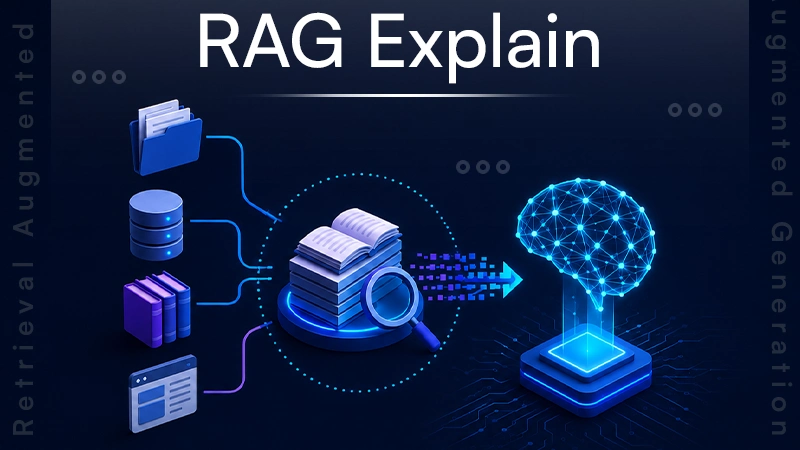
Retrieval-Augmented Generation (RAG) is an AI framework that connects LLMs to external data sources so they can give accurate and…
August 3, 2026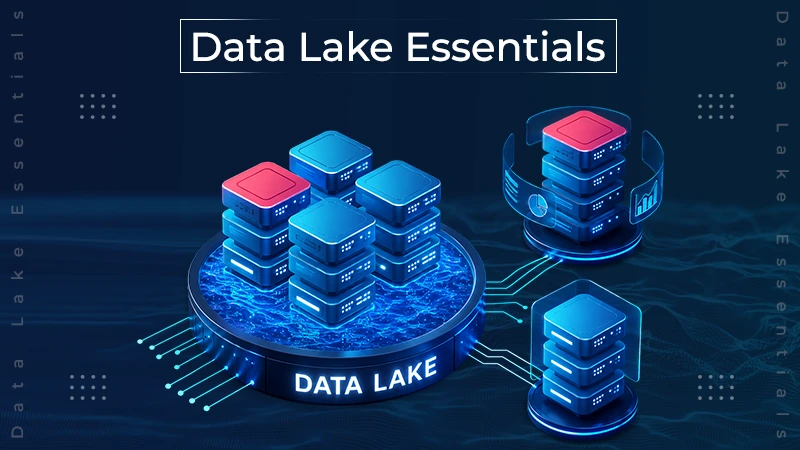
A data lake is a storage repository specifically designed to store large amounts of structured, semi-structured, and unstructured data in…
July 30, 2026
Every second, businesses generate massive amounts of data through customer interaction, SaaS applications, and cloud platforms. Collecting this data is…
July 27, 2026 By Jim Hartman