 By Jim Hartman
Ans: Data extraction means extracting relevant information from the bulky data sources to retrieve information for executing data analytics techniques.

Every time you post a story on social media, search on Google, buy on an e-commerce site, or just book a cab for a ride, the logs and histories are all saved somewhere in the cloud storage.
Now you can imagine how much data is generated every hour across the world. But these data sets are so huge that utilizing them in their pristine form is not practically possible.

So, data analysis captures important parts of it through the data extraction process, which is less well-known among the masses. Businesses often rely on a professional data extraction service to collect and organize relevant information from massive datasets efficiently.
So here we will dig into this process, learn its types, its benefits, and challenges, and some of the best tools used for it.
Data extraction is extracting meaningful and usable information from the humongous data repositories.
Deakin University, Burwood, Australia, defines it in technical terms as “Data extraction involves systematically collecting relevant data from included studies, such as key findings, study characteristics, and methodological details. ”
Let me explain to you in simple language.
The technology has percolated to the narrowest crevices of human existence. Internet accessibility has reached places where even human habitation is not possible. In such a situation, the data generation and storage have shot up exponentially.
Though it seems like a valuable opportunity, pulling productive and useful information is a daunting challenge. The social media posts, purposeful and spammy emails, audio, clips, pictures, location details, search sites, and much more just keep on piling every day.
But these cluttered data sets can be constructively used if essential information is extracted, aggregated, and analyzed. Businesses these days derive sales trends, gauge user demographics, and understand customer behavior through it. Organizations working with Dataqix also streamline these workflows by combining scalable data management and analytics support.
This is possible because of data extraction, one of the essential steps in the data analysis process, which itself is a rewarding procedure in business these days.
This can be understood by the statement of Peter Sondergaard, founder of The Sondergaard Group.
“Information is the oil of the 21st century, and analytics is the combustion engine.”
| Tech Fact: According to Statista, 149 zettabytes of data have been created, stored, copied, and consumed in 2024. |
“Data mining” is another term that we see more often in data analytics and sometimes compare with “data extraction.” But they differ in certain aspects. Let’s learn their essence.
The core difference between data extraction and data mining is:
| Data Extraction | Data Mining |
| Data collection and centralisation | Finding hidden patterns in the data |
| Uses unstructured and raw data | Uses structured, segregated, and clean data. |
| Data is transferred from one source to another | No data is transported |
| Methods used: web scraping, APIs, queries, etc. | Methods used: clustering, machine learning, etc. |
But they have certain things in common too:
The data extraction methods are further divided into three major sections based on the approach, logic, and data source used. These further diversify into more methods based on their primary utility. Organizations often combine these approaches with reliable data processing services to prepare extracted information for analysis and reporting.
Below is a brief account of these methods to help you understand them better.
These methods are applied to extract data, which itself is a multistep procedure.
The major steps in the data extraction process are locating data sources, setting priorities, selecting appropriate methods, running extractions, checking the output, and saving it.
These steps are explained below in simple and crisp words.
These steps allow retrieving only useful data, making the process highly beneficial in multiple ways.
Data extraction is beneficial in saving time and effort, reducing errors, enhancing data management and business intelligence, and making data AI and ML-ready.
Let’s take a look at them individually.
The 4 best data extraction services are NetNut, SerpAPI, Scrapingbee, and Apify. These tools are used in multiple ways to track, collect, and save data based on set priorities.
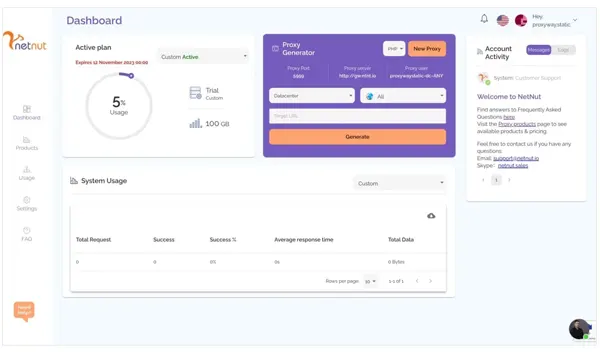
Netnut was founded in 2017 and claims to achieve 99% accuracy. It is a cloud-based service that uses safe proxy networks for extracting data through complex pipelines. For its best service, it has been trusted by some of the top global companies like Lenovo and Rocketreach.
Capterra Rating: 5/5
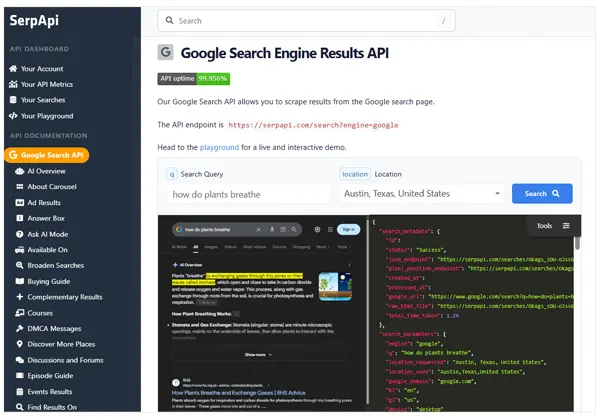
SerpAPI is a perfect tool to scrape search engines like Google, Yahoo, Baidu, YouTube, etc. This makes it worthwhile not just for data analytics but also for SEO techniques. Its JSON results make using, extracting, and saving data much easier.
Capterra Rating: 5/5
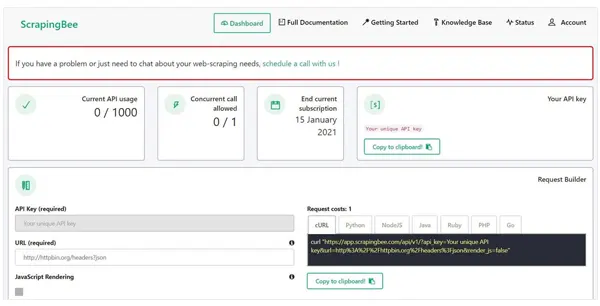
ScrapingBee is an efficient tool for handling proxies and headless browsers. Its scope further extends to AI, market intelligence, fintech, GTM, cybersecurity, and more fields. Also, its claim of a 99% success rate and being trusted by SAP, Zapier, and Deloitte makes it a good option.
Capterra Rating: 4.9/5
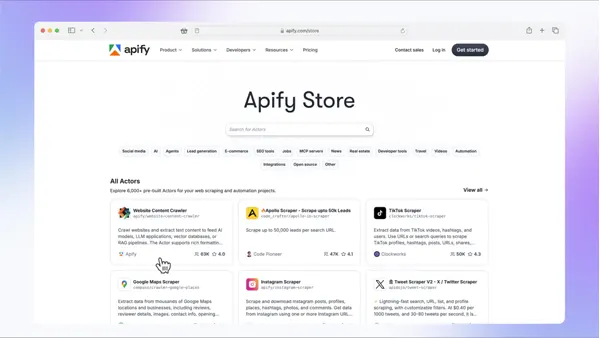
APIfy, founded in 2015, is a full-stack web scraping tool with cloud and on-premises versions. It is not just about extracting data but is also useful in tracking computers, generating leads, and monitoring social media trends, making it an all-encompassing solution.
Capterra Rating: 4.8/5
The prominent challenges in data extraction are pagination complexities, data quality issues, accessibility of big data, evolving schemas and APIs, and legal hassles in data transfers.
Although these challenges have simple solutions as well, which are provided below under these problems.
Solution: Make sure you execute the extractor loop throughout the page until the API signals that the work is done.
Solution: Add some basic validation rules before the extraction pipeline to only get what you want.
Solution: Always go with the tools that can handle big data. Also, make sure the pipeline expands horizontally when the data workload increases.
Solution: Flexible mapping and constant monitoring can balance, while using tools that adapt to the schema can simplify this hassle.
Solution: Use the tools that are compliant with the prevailing legal provisions and also encrypt data, whether in transit or at rest.
Data extraction is the initial and vital step in the entire data analytics process. But being the foundational stage, it demands utmost attention and precise execution to make sure the required data is collected and no unnecessary information gets space in the output. Many organizations also outsource data entry alongside data extraction to improve operational efficiency, reduce manual workloads, and maintain high-quality datasets for analysis.
Remember, the global market of data analytics is around USD 69.54 billion in 2024 and is expected to rise to 302.01 billion by 2030, which makes it a great opportunity for data scientists and analysts and the growing businesses.
Ans: Data extraction means extracting relevant information from the bulky data sources to retrieve information for executing data analytics techniques.
Ans: Descriptive analytics, diagnostic analytics, predictive analytics, and prescriptive analytics are 4 types of data analytics.
Ans: Yes, data extraction is a skill and requires dedicated human labor and digital programs and tools to perform the task.
Ans: Excel is a low-level data extraction tool that can capture data through its limited features. However, for heavy data or API-based data sources, dedicated tools to extract data can work better than Excel.
Sources:

Every time you post a story on social media, search on Google, buy on an e-commerce site, or just book…
June 27, 2026