 By Jim Hartman
It is a cost-effective strategy taken by one company to deploy another company (or third party) to handle raw data and its processing.

Data processing outsourcing is a crucial practice among corporations across the world due to its practicality. Instead of managing and processing their raw data, various types of businesses delegate the task to an outside agency. This practice saves a huge amount of time and money. So, now core operational activities can get closer attention.
For more insights into the topic, refer to this article. Various aspects of this particular outsourcing option are discussed below, such as its definition, major benefits, available services, etc.
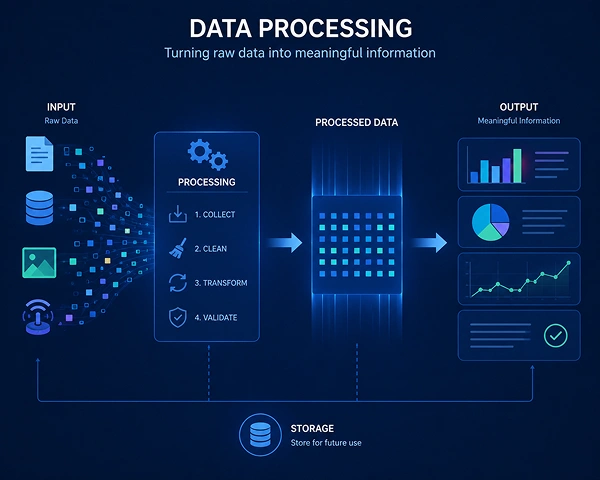
Data processing is a business practice of converting raw and disorganized data into highly organized, insight-packed analytics through structured workflows that often include data conversion services for standardizing information across systems.
The latter helps businesses free up a lot of internal resources while leveraging specialized data processing services offered by experienced outsourcing partners. That is because now qualified external parties handle big data and extract crucial information from it. And, the outsourcing business gets accurate key insights faster for planning, strategizing, and predicting big market decisions.
Companies that outsource data processing have higher chances of success due to having fewer things to do and more time to focus on other neglected growth areas.
Inner workings: The four major steps involved in data processing are data collection, preparation, analysis, and storage, often beginning with accurate data extraction services that gather information from multiple sources. That is how, under data processing, raw data is converted into usable information.
The major benefits of data processing outsourcing are elaborated below. It enjoys high affordability, better expertise, access to advanced technology, enhanced scalability, and more time & resources.
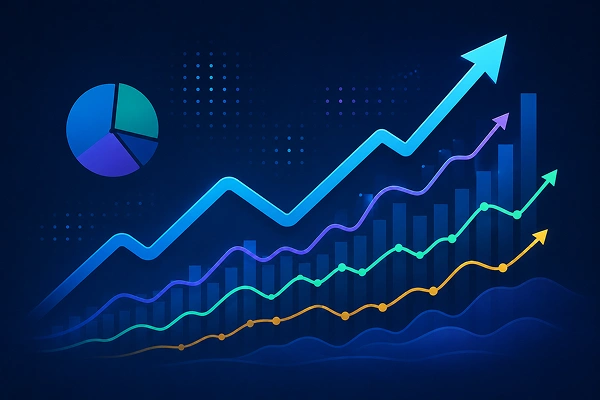
The most common trends in 2026 related to outsourced data processing are high automation, better data security, and preferring a hybrid approach.
The most common types of data processing outsourcing services are listed below.
Consider the following headings to learn about the nature of each service and its applicability.
In this service, large datasets are collected over a fixed period of time, and then all of it is processed in a single batch. That is why it is called batch processing. This option is ideal for payroll processing, generating reports, and billing.
As the name suggests, here the data is collected and processed as soon as it is generated or received. Processing happens in real time. This service provides the least possible delay and handles incoming raw data continuously. Such a form of service is quite common with financial trading platforms.
Online transaction processing (OLTP) is needed in the banking and e-commerce sectors. This one outsourcing data processing services is designed for clients who need quick processing and high availability. Key features of this service are supporting multiple data inputs at once and providing immediate feedback.
Note: For example, while doing an online transaction, your payment is processed first, and then you get a confirmation message or email. That is a practical application of OLTP.
This type of data processing is usually opted for by businesses for sales-related forecasting and trend analysis. Furthermore, retailers also use this service to gather patterns in customer behavior, which is necessary for maintaining the right inventory levels.
It helps organize and process large and complex data, including lots of dimensions, such as time, geography, classification based on various factors, etc.
The greatest advantages of this method are two-fold. First, it allows for parallel processing, and second, high fault manageability. In other words, large data is spread across multiple servers. So, the whole of it can be handled at the same time with greater efficiency. That is because one server or machine cannot handle all the information at once.
And, this way, if one node fails, that doesn’t affect the processing being done in other nodes. Hence, managing fault in one node becomes way easier and less consequential.
As the name suggests, this method of data processing heavily relies on automation to speed up the process. Most MNCs carry huge datasets. So, automation is the only way to make the conversion fast without compromising on the quality of analytics.
This approach is also popular in the data processing and outsourced services industry. It is where the natural language processing and machine learning techniques are integrated. The fusion is usually done on data analytics platforms. Such services are only outsourced by multinational corporations for advanced intelligence capabilities.
If your business involves continuous data flow, wants low latency, and demands better scalability amidst fluctuating data generation, this is what you need to outsource. Stream processing handles data in real-time as it flows into the system. It has huge applicability in the social media and telecom industries.
Do you know? Netflix, the biggest name in the entertainment industry, uses this data processing service for real-time content management and genuine analytics.
The best way to choose the right partner for data processing outsourcing is sixfold. Just thoroughly explore aspects such as experience, technology, compliance, scalability, reputation, and collaboration in the way highlighted below.
In case you are still not sure about whether to choose data processing outsourcing or just go with an in-house solution, consider the following tables. This quick but in-depth analysis will help you make up your mind decisively. Or, if you are still confused, you need a hybrid approach!
| In-House Data Processing | |
| Advantages | Disadvantages |
| High control over data and processing | Big investment |
| Enhanced compatibility with internal workflows | Training & capable human resource requirements |
| Scalability hassle | |
| Choose: When you are prioritizing data privacy and security over affordability. | |
| Outsourced Data Processing | |
| Advantages | Disadvantages |
| Cost-effectiveness | Might have data security concerns |
| Access to expertise and the latest technology | Loss of control over data processing |
| Ease of scalability | |
| Saving of limited resources for core activities | |
| Choose: When you are prioritizing cost-effectiveness over having a high say in controlling and processing your data. | |
Expert advice: Choose the data processing outsource option for the least confidential data or when the provider is a long-trusted partner.
Major sectors or industries that capitalize on the data processing outsourcing option are legal, logistics, insurance, banking, and e-commerce.
Modern-day markets are technically complicated and too competitive. That is why most companies love to outsource services and delegate tasks. This frees up internal resources to a great extent. Outsourcing data for processing is one such practice.
Data processing outsourcing is a smart way to free up a company’s internal resources. So, teams can better focus on core activities with saved time and money. Outsourced data services are cost-effective and secure, providing better scalability and access to cutting-edge technologies. As globalization reaches its peak, outsourcing is going to be the number one source of reducing high operational costs.
It is a cost-effective strategy taken by one company to deploy another company (or third party) to handle raw data and its processing.
The four types of outsourcing are professional outsourcing, IT outsourcing, manufacturing outsourcing, and process-specific outsourcing.
No, it is not illegal. A company can outsource various aspects of its operations for efficiency and cost savings.
Sources:
AI and machine learning have stepped out of laboratories to be used in a multitude of everyday products. Some of…
September 14, 2026
When you see the padlock icon on your computer or visit a secure website, something immediately clicks within the invisible…
August 27, 2026
Markdown is a type of lightweight markup language that is used to represent plain text in a structured way. It…
August 21, 2026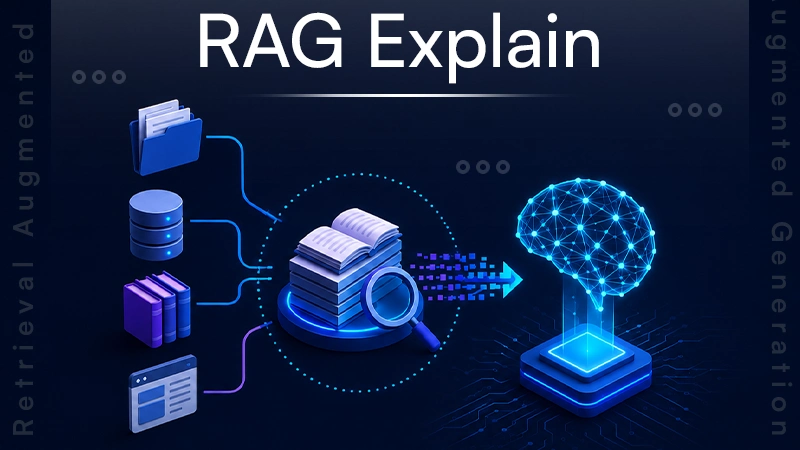
Retrieval-Augmented Generation (RAG) is an AI framework that connects LLMs to external data sources so they can give accurate and…
August 3, 2026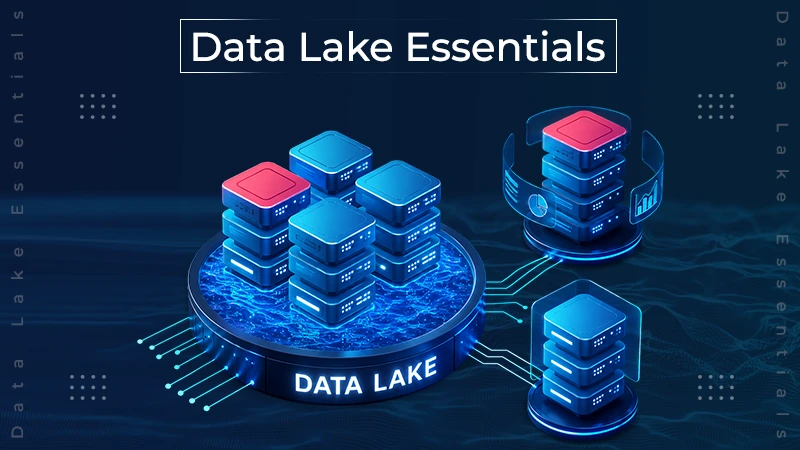
A data lake is a storage repository specifically designed to store large amounts of structured, semi-structured, and unstructured data in…
July 30, 2026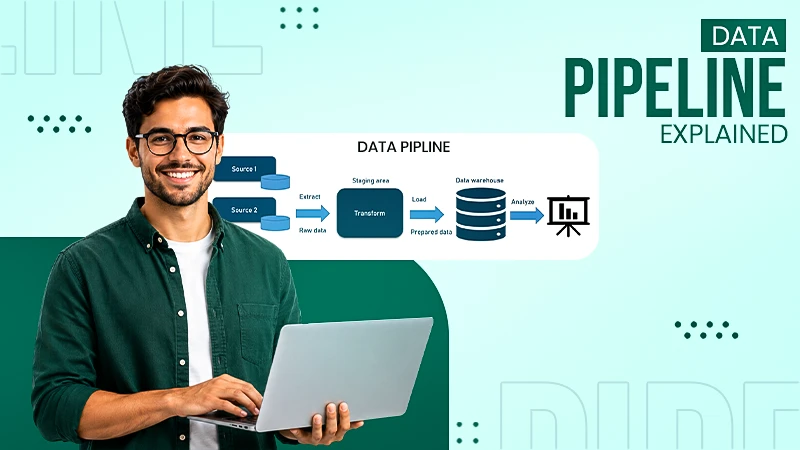
Every second, businesses generate massive amounts of data through customer interaction, SaaS applications, and cloud platforms. Collecting this data is…
July 27, 2026 By Tina Brown